
A pleasure attending the AI Horizons 2024 conference organised by Universidad Carlos III de Madrid. Some personal headlines, thoughts, and conclusions after the conference follow.
The first session addressed the impact of AI on the healthcare sector and presented impressive use cases and applications to improve efficiency, increase the accuracy of diagnoses and personalise treatments. In many cases, the presenters referred to ML models that show validation problems due to the scarcity of data, especially (but not only) for rare diseases. Therefore, there is great effort to streamline and innovate data collection processes. In some cases like mental illnesses, such automated collection will override the existing classical manual processes based on tests. Data protection and privacy was also identified as a key work area, and federated learning was mentioned as a potential solution for hospitals and researchers to collaborate without exposing their data. We spent some time discussing ethics, since AI, wearables, and patient-related technology were shown not only to collect data but also to act on our body perception and behaviour. What are the limits? In what situations should this be permissible?
The second session dealt with the data economy. Prof. Raul Castro Fernández exposed a novel overarching philosophical definition of the value of data, stressing the importance of specifying precisely what we understand by that value, a philosophical yet timely and needed presentation when many people still confuse it with the value of placing an online add in an advertising slot on a webpage. The talk clearly separated the value of data and the value of documents representing them, and distinguished between instrumental and intrinsic, prior and post, absolute and relative value of data. In the roundtable that followed. I found very interesting the market trends in the online advertising industry and the challenges it faces as a result of corruption in the measured KPIs, as Álvaro Mayol (TapTap Digital) pointed out. I loved the concept of data swamps (as opposed to data lakes) and the need to clean them to build new reliable use cases. Participants also pointed to fairness and bias as key challenges for data markets and AI/ML models. It was in this session that I showed a demo of my data pricing tool.
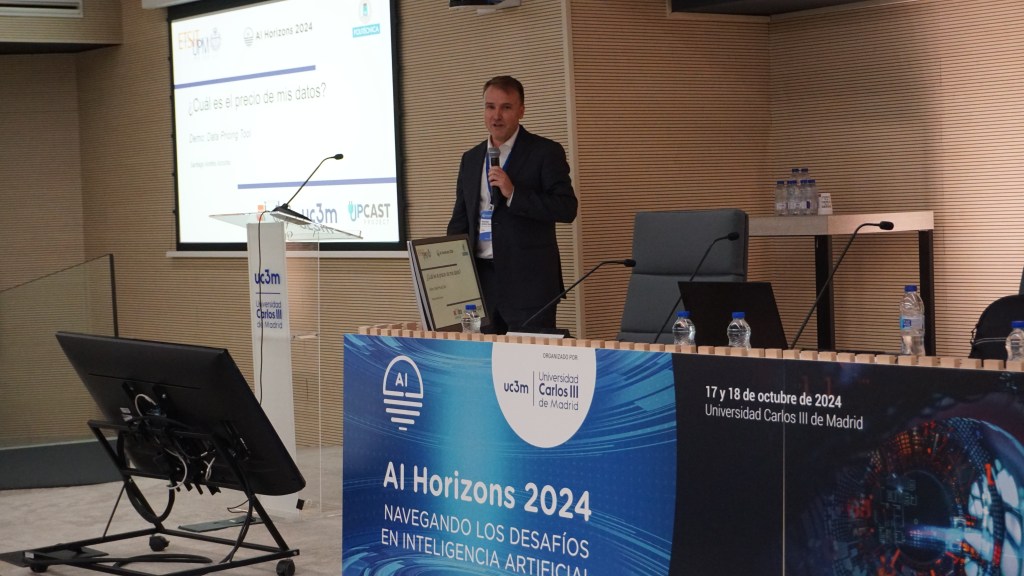
Finally, Esteban Moro started a third session on the impact of AI on society. Restricting its scope to Generative AI (GenAI), Esteban shared innovative use cases and provided useful data on how the cost of training models is decreasing, paving the way to the deployment of local GenAI models for enterprises, organisations, and even individuals. He presented the conclusions of a report by Goldman Sachs about the impact of GenAI on employment, and a very interesting paper of theirs that analyses impact on skills (complementary or even substitutive) as a driver to the impact on jobs or automating tasks that leverage them. He pointed out that AI will improve productivity in developed countries, widening the gap with less developed ones. There was also room for discussion on the impact of GenAI on education and the need to educate students (and professionals) to use it as a tutor rather than as a crutch. In the final roundtable, the participants discussed the negative impact of EU’s digital regulation on innovation, the proposals stemming from the Draghi report, and ways to harness the benefits of AI in the society while navigating the risks associated to this technology.
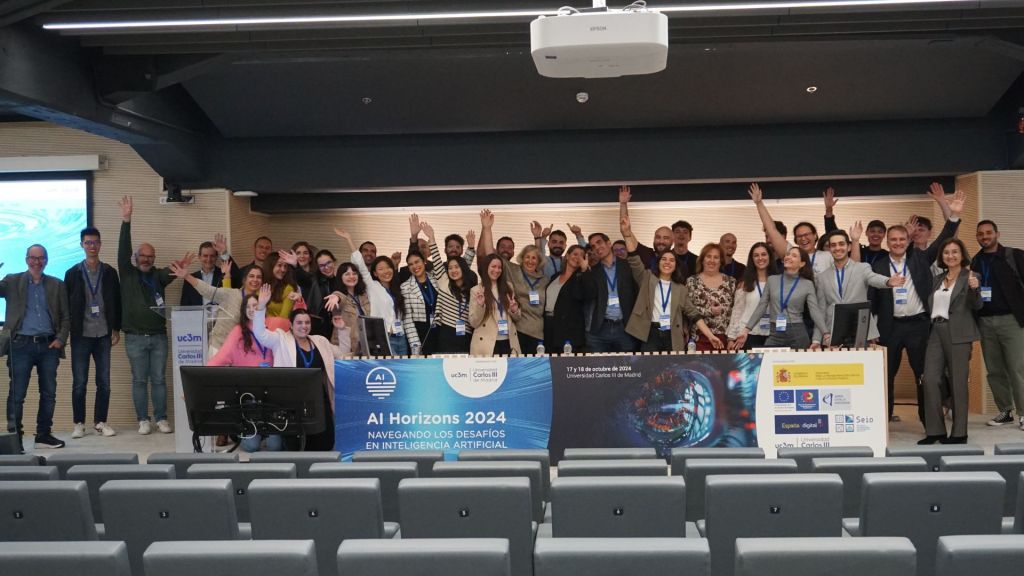
Thanks very much for the invitation and the possibility to contribute to such an exciting event, and congratulations on a superb organisation. I hope more AI Horizons occur in the future to gather Spanish multidisciplinary researchers and practitioners working on the data economy and AI.
 Santiago Andrés Azcoitia
Deja un comentario