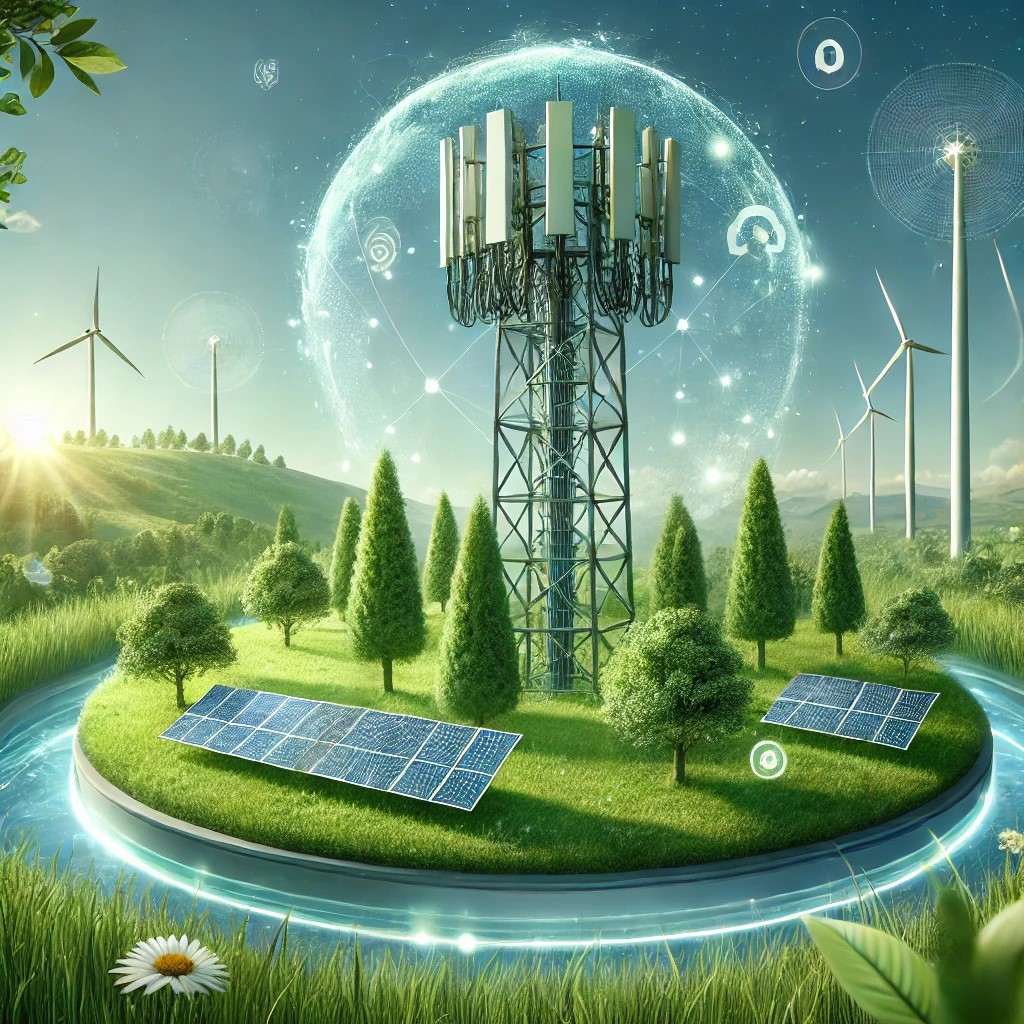
Work with us at GTIC in a paid Master Thesis to develop a Framework to Incentivise Green Networks and Infrastructure in the 6G Mobile Ecosystem.
Addressing climate change through a global reduction in carbon emissions and a transition to greener energy sources is essential to accomplishing the United Nations’ Sustainable Development Goals (SDGs), and ultimately to protecting our planet and ensuring a liveable future for generations to come. Although the ICT sector is responsible for barely 2-3% of global energy consumption and 1% of greenhouse gas (GHG) emissions, this contribution is expected to grow due to soaring data and computing power demanded by AI and ML applications and services across many industry verticals. The processing required to train and run these applications and services will increasingly be distributed in virtual infrastructures hosting mobile networks in the cloud-edge continuum. The future generation of mobile networks, 6G, must address the challenge of controlling energy consumption and carbon emissions in this new network paradigm, particularly those in Radio Access Networks (RAN) and edge computing nodes.
The mere existence of technical means to enable and measure sustainability indicators in network slices does not guarantee that stakeholders will adopt these greener services. Therefore, effective mechanisms to incentivize the adoption of greener network slices are essential to ensure their widespread and practical implementation. Without such mechanisms, the ecosystem risks falling short of its sustainability potential.
Related to the SNS European Project 6Green (https://www.6green.eu/), this Master Thesis will explore mechanisms to incentivise stakeholders for greener and more efficient deployment and operation of networks and services in 6G and will define a techno-economic framework to capture the dynamics of flexible vertical application deployment and operation over 6G network slices. The model will cover several network levels, from regional data centers to edge nodes close to the user, will work with GSMA’s slice templates, and will examine potential policy measures such as green infrastructure subsidies, user-paid green premiums and dynamic pricing mechanisms (e.g., based on capacity utilization or slice duration), and potential regulatory restrictions on minimum DLAs.
This Master Thesis is expected to produce a linear programming model that allows to analyse the dynamics of infrastructure, network and service providers, and a Python engine to solve the model, make simulations, and study the behaviour of the stakeholders in different settings. The student will participate in SNS European Project 6Green, and in writing a research paper to disseminate the results of the Master Thesis.
If you are interested, please send an e-mail with your resume to santiago.andres@upm.es and zoraida.frias@upm.es before Jan 14th 2025.

 Santiago Andrés Azcoitia
Replica a María López Cancelar la respuesta